Introduction: A Haven for Rare and Endangered Species
Alabama has the third highest number of endangered or threatened species in the United States, surpassed only by Hawaii and California. The Mobile-Tensaw Delta serves as a critical refuge for many of these imperiled species, providing habitat that has been lost or degraded elsewhere. The delta's mosaic of habitats—from bottomland hardwood forests to cypress-tupelo swamps to brackish marshes—supports a remarkable diversity of rare, threatened, and endangered species that depend on these ecosystems for their survival.
This section explores the at-risk species of the Mobile-Tensaw Delta, examining their ecological roles, the threats they face, and the conservation efforts aimed at protecting them. By understanding these vulnerable components of the delta's biodiversity, we can better appreciate the importance of preserving this extraordinary ecosystem for future generations.
Aquatic Species at Risk
The rivers, streams, and wetlands of the Mobile-Tensaw Delta support numerous aquatic species that have experienced significant population declines. These species face threats from habitat alteration, pollution, invasive species, and climate change.
Gulf Sturgeon (Acipenser oxyrinchus desotoi)
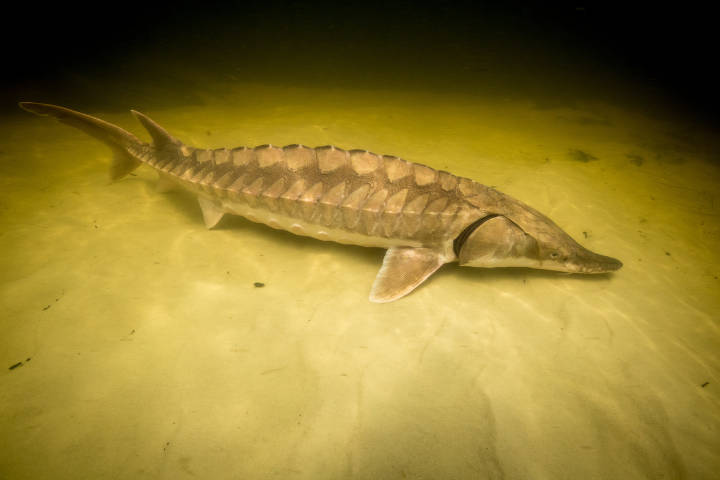
Gulf sturgeon (Acipenser oxyrinchus desotoi), a federally threatened anadromous fish that can grow up to 8 feet long and live for over 40 years. These ancient fish spawn in freshwater rivers but spend most of their adult lives in estuarine and marine environments. Their population has declined by more than 70% due to overfishing, habitat loss, and river damming.
The Gulf sturgeon, federally listed as threatened, represents one of the most ancient fish lineages in North America, with ancestors dating back over 200 million years. These remarkable fish can grow to lengths exceeding 8 feet and weights over 200 pounds. Gulf sturgeon are anadromous, meaning they spawn in freshwater rivers but spend much of their adult lives in estuarine and marine environments. The Mobile-Tensaw Delta serves as an important migration corridor for Gulf sturgeon moving between marine habitats and upstream spawning areas.
Gulf sturgeon populations have declined dramatically due to overfishing, habitat loss, and river damming, which blocks access to historical spawning grounds. Conservation efforts focus on habitat protection, dam removal or modification to improve fish passage, and strict harvest regulations. Research and monitoring programs track sturgeon movements using acoustic telemetry, providing valuable data for conservation planning (U.S. Fish & Wildlife Service, 2023).
Alabama Sturgeon (Scaphirhynchus suttkusi)
The Alabama sturgeon, endemic to the Mobile Basin, is one of the rarest fish in North America and is federally listed as endangered. Smaller than the Gulf sturgeon, this species grows to about 30 inches in length and inhabits the main channels of large rivers. The Alabama sturgeon has experienced a catastrophic population decline, with only a handful of individuals documented in recent decades. The primary threats include habitat fragmentation due to dams, channel modifications, and historical overfishing.
Conservation efforts for the Alabama sturgeon include habitat protection, water quality improvements, and attempts at captive propagation. However, the extreme rarity of this species makes recovery particularly challenging. The Mobile-Tensaw Delta represents one of the last potential refuges for this critically imperiled fish (Alabama Department of Conservation and Natural Resources, 2024).
Freshwater Mussels: The Silent Sentinels
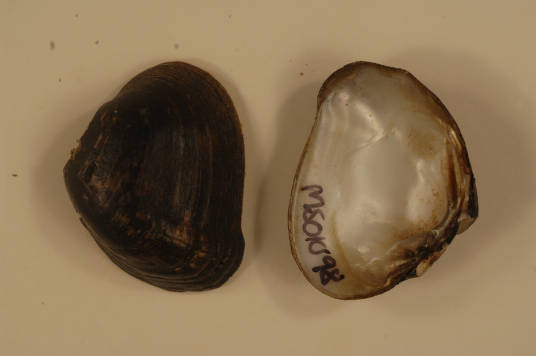
Southern combshell (Epioblasma penita), a federally endangered freshwater mussel endemic to the Mobile Basin. This species has disappeared from more than 90% of its historical range due to habitat degradation, pollution, and dam construction. Freshwater mussels are vital bioindicators of water quality and provide important ecosystem services through their filter-feeding activities.
The Mobile Basin harbors the greatest diversity of freshwater mussels in the world, with over 60 species. Unfortunately, many of these remarkable mollusks are now endangered or threatened. The southern combshell (Epioblasma penita), southern clubshell (Pleurobema decisum), Alabama moccasinshell (Medionidus acutissimus), and orangenacre mucket (Lampsilis perovalis) are just a few of the federally protected mussel species found in the Mobile-Tensaw Delta and its tributaries.
Freshwater mussels serve as important bioindicators of water quality and provide valuable ecosystem services through their filter-feeding activities. A single mussel can filter more than 15 gallons of water per day, removing algae, bacteria, and suspended particles. Mussel populations have declined due to habitat degradation, pollution, dam construction, and invasive species. Conservation efforts include habitat protection, water quality improvements, captive propagation, and reintroduction programs (Mobile Bay National Estuary Program, 2022).
Terrestrial Species at Risk
The forests, wetlands, and uplands of the Mobile-Tensaw Delta provide critical habitat for numerous terrestrial species that have experienced significant population declines throughout their ranges.
Red Hills Salamander (Phaeognathus hubrichti)
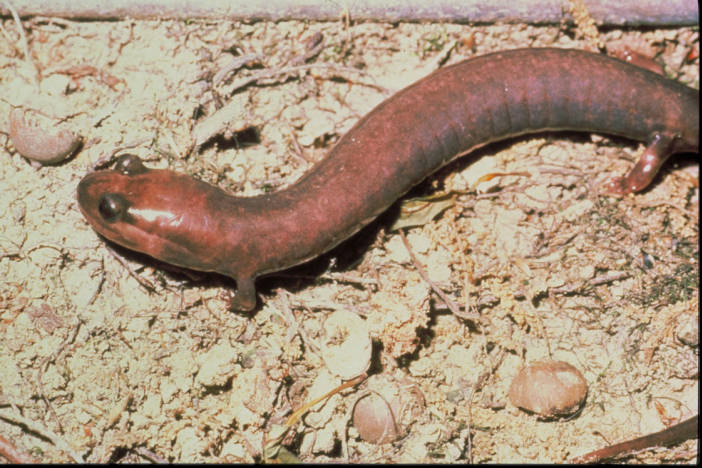
Red Hills salamander (Phaeognathus hubrichti), a federally threatened amphibian endemic to Alabama. This unique salamander represents its own genus and is found nowhere else in the world. It requires specific geological conditions with moist, steep slopes and hardwood forest cover, making it particularly vulnerable to habitat loss and fragmentation.
The Red Hills salamander, federally listed as threatened, is endemic to Alabama and represents its own genus (Phaeognathus). This remarkable amphibian is found nowhere else in the world and inhabits a narrow band of habitat along the southern edge of the Mobile-Tensaw Delta watershed. Red Hills salamanders require specific geological conditions, living in burrows on moist, steep slopes with hardwood forest cover. They can grow to about 10 inches in length and have a distinctive purplish-brown coloration.
The primary threat to Red Hills salamanders is habitat loss and fragmentation due to timber harvesting, road construction, and development. Conservation efforts focus on habitat protection through land acquisition, conservation easements, and sustainable forestry practices. The Nature Conservancy and other organizations have established several preserves specifically to protect Red Hills salamander habitat (Alabama Wildlife Federation, 2023).
Eastern Indigo Snake (Drymarchon couperi)
The eastern indigo snake, federally listed as threatened, is North America's longest native snake, with adults regularly exceeding 7 feet in length. These magnificent reptiles have glossy blue-black scales that appear iridescent in sunlight. Eastern indigos are non-venomous and serve as apex predators in their ecosystems, feeding on a variety of prey including other snakes (even venomous species), small mammals, birds, and amphibians.
Eastern indigo snakes have experienced dramatic population declines due to habitat loss, fragmentation, and historical collection for the pet trade. They require large, intact habitat areas and are particularly vulnerable to road mortality. Conservation efforts include habitat protection, reintroduction programs, and public education to reduce persecution. The Mobile-Tensaw Delta represents important potential habitat for eastern indigo snake recovery efforts (U.S. Fish & Wildlife Service, 2024).
Alabama Red-bellied Turtle (Pseudemys alabamensis)
The Alabama red-bellied turtle, federally listed as endangered, is endemic to the Mobile-Tensaw Delta and adjacent areas. This large freshwater turtle, which can reach shell lengths of 12 inches, is characterized by its distinctive red plastron (lower shell) and prominent yellow stripes on its head and neck. Alabama red-bellied turtles are primarily herbivorous, feeding on aquatic plants in the delta's rivers, bayous, and backwaters.
The primary threats to Alabama red-bellied turtles include habitat loss and degradation, nest predation, boat strikes, and collection. Conservation efforts focus on habitat protection, nest site management, and public education. Research programs monitor population trends and nesting success to inform conservation strategies (Alabama Department of Conservation and Natural Resources, 2023).
Plant Species at Risk
The Mobile-Tensaw Delta supports numerous rare and endangered plant species, many of which have highly specialized habitat requirements or limited distributions.
Alabama Canebrake Pitcher Plant (Sarracenia alabamensis)
The Alabama canebrake pitcher plant, federally listed as endangered, is endemic to central Alabama and occurs in seepage bogs and wet pine savannas at the northern edge of the Mobile Basin. This carnivorous plant has distinctive yellowish-green pitchers with reddish veins and a ruffled hood. Like other pitcher plants, it obtains nutrients by trapping and digesting insects in its modified leaf structures.
The primary threats to the Alabama canebrake pitcher plant include habitat loss due to development, fire suppression, and hydrological alterations. Conservation efforts focus on habitat protection, prescribed burning to maintain open bog conditions, and ex situ conservation in botanical gardens. Several protected areas have been established specifically to conserve populations of this remarkable plant (The Nature Conservancy, 2021).
Georgia Rockcress (Arabis georgiana)
Georgia rockcress, federally listed as threatened, occurs in specialized bluff habitats along the upper reaches of the Mobile Basin. This perennial herb produces white flowers in early spring and requires specific geological conditions, growing on steep, rocky slopes with thin soils. Georgia rockcress populations have declined due to habitat loss, invasive species encroachment, and recreational impacts.
Conservation efforts for Georgia rockcress include habitat protection, invasive species control, and population monitoring. Several protected areas within the Mobile Basin include populations of this rare plant, and conservation organizations work with private landowners to protect additional sites (U.S. Fish & Wildlife Service, 2022).
Conservation Efforts and Challenges
The protection and recovery of at-risk species in the Mobile-Tensaw Delta require coordinated conservation efforts at multiple scales, from site-specific interventions to landscape-level planning.
Protected Areas and Conservation Lands
Significant portions of the Mobile-Tensaw Delta are protected through various designations, including the Mobile-Tensaw Delta Wildlife Management Area, Weeks Bay National Estuarine Research Reserve, and Blakeley State Park. These protected areas provide critical habitat for numerous at-risk species and serve as core conservation zones within the broader landscape.
Conservation organizations like The Nature Conservancy, the Alabama Coastal Foundation, and the Mobile Bay National Estuary Program work to expand the network of protected lands through acquisitions and conservation easements. These efforts focus on creating connected corridors of habitat that allow for species movement and genetic exchange, which is particularly important for the long-term viability of at-risk populations.
Species Recovery Plans and Reintroduction Efforts
For federally listed species, formal recovery plans guide conservation actions and establish criteria for eventual delisting. These plans typically involve habitat protection and restoration, population monitoring, threat reduction, and sometimes captive breeding and reintroduction efforts.
Several reintroduction programs are underway in the Mobile-Tensaw Delta and surrounding areas, including efforts to restore populations of eastern indigo snakes, Alabama red-bellied turtles, and various freshwater mussel species. These programs involve partnerships between government agencies, conservation organizations, academic institutions, and private landowners.
Challenges and Future Directions
Despite significant conservation efforts, at-risk species in the Mobile-Tensaw Delta face ongoing challenges from habitat loss, invasive species, pollution, climate change, and other threats. Addressing these challenges requires integrated approaches that consider both ecological and social factors.
Future conservation efforts will likely focus on increasing landscape connectivity, restoring natural hydrological processes, controlling invasive species, and engaging local communities in stewardship activities. By working together to protect the remarkable biodiversity of the Mobile-Tensaw Delta, we can ensure that America's Amazon continues to serve as a haven for rare and endangered species for generations to come.